

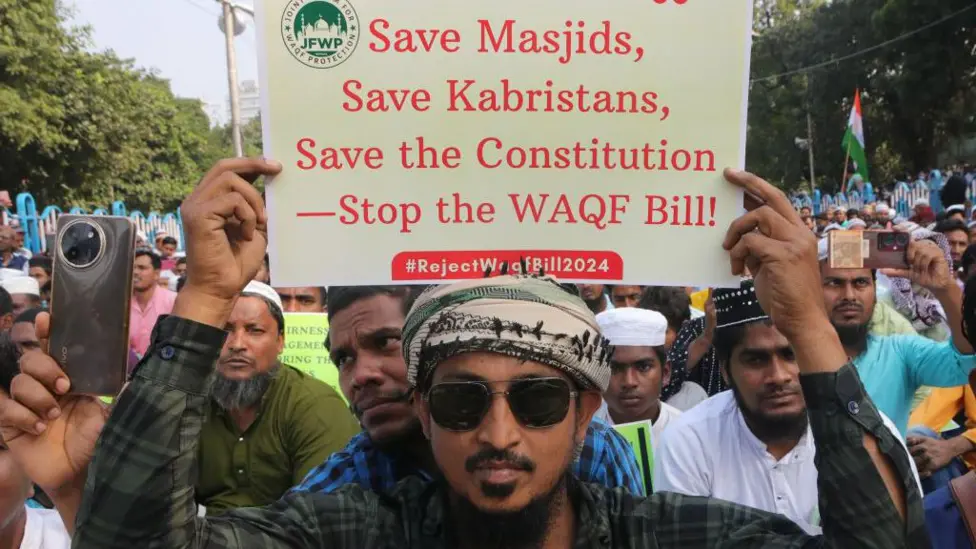
New Delhi, April 3, 2025: After prolonged debates in the Lok Sabha and Rajya Sabha, the Waqf (Amendment) Bill, 2025, has finally been passed in India. The bill aims to bring significant changes to the management and regulation of Waqf properties, which are assets donated by the Muslim community. However, opposition parties and a section of Muslim organizations claim that it is an attempt to undermine the rights of India’s largest religious minority and could serve as a new tool of oppression.
The bill was passed in the Lok Sabha with a vote of 288-232 and in the Rajya Sabha with 128-95. It has now been sent to President Droupadi Murmu for her assent, after which it will become law. Initially introduced in Parliament in August last year, the bill faced strong opposition and was referred to a Joint Parliamentary Committee (JPC). Based on the JPC’s recommendations, the amended version of the bill has now been passed.
Key Provisions of the Bill
The Waqf Bill introduces several significant changes, including:
- Inclusion of non-Muslim members in Waqf Boards, which critics argue undermines the autonomy of the Muslim community.
- Abolition of the “Waqf by User” concept, leaving the fate of many undocumented but long-used properties uncertain.
- Transfer of property survey responsibilities from Waqf Boards to District Collectors.
- Increased oversight by the central government and mandatory use of a centralized portal for property registration.
Government’s Argument
Union Home Minister Amit Shah and Minority Affairs Minister Kiren Rijiju have defended the bill, stating that it will eliminate corruption and mismanagement in Waqf properties while safeguarding the rights of ordinary and impoverished Muslims. Shah said, “This bill will not interfere with religious activities but will bring administrative transparency. The opposition is spreading fear for votes.”
Opposition’s Allegations
The Congress, Samajwadi Party, AIMIM, and other opposition parties have labeled the bill “unconstitutional” and “anti-Muslim.” Congress leader Gaurav Gogoi said, “It will weaken the Constitution, divide society, and strip minorities of their rights.” AIMIM chief Asaduddin Owaisi claimed, “This bill is not meant to protect Waqf properties but to destroy them.” Many see it as part of the Hindu nationalist BJP government’s anti-Muslim agenda.
Muslim Community’s Response
The All India Muslim Personal Law Board (AIMPLB) and other Muslim organizations have opposed the bill, arguing that it paves the way for the loss of centuries-old Waqf properties. They have warned of legal action. At a protest rally in Jantar Mantar, Owaisi said, “This is a conspiracy to turn Muslims into second-class citizens.”
Potential Impact
India has approximately 8.7 lakh registered Waqf properties, valued at over ₹1.2 lakh crore. These properties are used for mosques, madrasas, graveyards, and charitable purposes. The implementation of this bill will bring radical changes to their management, raising concerns within the Muslim community.
Analysts suggest that the bill may be part of the Modi government’s broader political agenda, leaning toward majoritarianism at the expense of minority rights. It has also raised questions about India’s Ganga-Yamuna Tehzeeb, or tradition of communal harmony.
In the coming days, legal and political battles against the bill may intensify, posing a significant test for India’s secular character.